At every gathering, there’s a moment when someone brings out a dish that makes everyone pause. The food tastes fresh, looks vibrant, and brings people together. A great pasta salad recipe can be that dish for you.
Remember that summer event where you wished you had brought something special? A homemade pasta salad is the perfect solution. It’s not just food—it’s a way to show care while keeping things simple.
Mastering a pasta salad recipe gives you the confidence to contribute to any event. Whether it’s a backyard barbecue or a potluck dinner, you’ll have a dish ready to impress. The American Culinary Federation says balancing acidity and fat is key to excellent cold dishes.
This guide will help you every step of the way. You’ll learn how to pick ingredients, mix your dressing, and time everything perfectly. The result is a dish that tastes like it came from a professional kitchen.
Key Takeaways
- Balance acidity and fat to create depth in your pasta salad dressing
- Choose pasta shapes that hold sauce and toppings well
- Prepare fresh vegetables with proper cutting techniques for maximum crunch
- Cool your pasta completely before mixing to avoid wilting ingredients
- Make your pasta salad recipe ahead of time for better flavor development
- Store your dish in airtight containers to keep it fresh longer
- Prevent soggy pasta by dressing your salad right before serving
Why This Pasta Salad Recipe Is a Crowd Favorite
A good pasta salad recipe brings people together. It has the perfect mix of texture and taste. Soft pasta, crispy veggies, and a tasty dressing make it irresistible.
This salad is perfect for outdoor gatherings in warm weather. It’s light and refreshing, unlike heavy casseroles. Serve it when it’s over 80 degrees Fahrenheit. It’s great for summer picnics, potlucks, and barbecues.
Quality ingredients are key. Fresh veggies, good olive oil, and quality pasta keep it appealing for hours. It stays nice on a buffet table, not soggy or falling apart.
This dish suits many tastes. Meat lovers, vegetarians, kids, and adults all enjoy it. Its versatility makes it a family favorite for years.
- Light and refreshing texture appeals to summer appetites
- Maintains quality even after sitting out for several hours
- Works with various dietary preferences and restrictions
- Easy to transport to gatherings and events
- Simple to customize with your favorite ingredients
Understanding why this pasta salad recipe is loved helps us see its value in American summer cooking. It brings people together and satisfies everyone’s taste at the table.
Essential Ingredients for Your Homemade Pasta Salad
Making a great homemade pasta salad starts with choosing top-notch ingredients. These ingredients should taste good and look appealing. The right mix of ingredients turns a simple salad into a hit with your guests.
There are two main parts to a fantastic pasta salad. First, you need fresh veggies for their sweetness and crunch. Second, you need pantry items to blend all flavors together.
Selecting Fresh Produce
Use the freshest veggies for your salad. In the U.S., many veggies are at their best from June to August.
- Cherry tomatoes—sweet, colorful, and perfectly sized for salads
- Crisp cucumbers—provide refreshing texture and hydration
- Bell peppers—red, yellow, or orange varieties add crunch and sweetness
- Red onions—deliver sharp flavor that balances other ingredients
- Fresh spinach or arugula—adds nutritional value and mild peppery notes
Go to local farmers’ markets for the freshest produce. This way, your pasta salad will have the best colors and tastes.
Choosing Quality Pantry Staples
Your pantry items are the heart of your salad’s flavor. Choose high-quality items to make your dish stand out:
- Extra virgin olive oil—pick a trusted brand like California Olive Ranch or Colavita
- Balsamic vinegar—true vinegar from Modena adds depth and complexity
- Dijon mustard—gives a subtle tanginess and helps mix the dressing
- Garlic—fresh cloves add a strong aroma to your dressing
- Sea salt and black pepper—key for seasoning
These basics make a dressing that sticks well to pasta and veggies. This ensures every bite is a delight.
Selecting the Best Pasta Shapes for Texture
The shape of your pasta is key to a great pasta salad. Different shapes hold dressing and flavors in unique ways. Choosing the right shape ensures every bite is perfect and your guests will love it.
Short, sturdy pasta shapes are best for salads. They have ridges and curves that trap dressing and small veggies. This keeps the dressing on the noodles, not at the bottom of your bowl.
- Fusilli – This spiral pasta grabs dressing and holds veggies well
- Rotini – Twisted noodles create pockets for flavor
- Farfalle – Bow-tie pasta catches dressing and looks interesting
- Penne – Tube pasta with ridges holds dressing inside and out
- Orecchiette – Small cup shapes trap veggies
Cook pasta until it’s al dente, usually 8 to 10 minutes. Check the package for exact time. It should be tender but firm.
| Pasta Shape | Texture Quality | Dressing Hold | Best For |
|---|---|---|---|
| Fusilli | Firm spiral coils | Excellent | Vinaigrette dressings |
| Rotini | Tight twisted form | Excellent | Creamy or oil-based dressings |
| Farfalle | Delicate bow shape | Very good | Light, fresh dressings |
| Penne | Smooth tube ridges | Very good | Chunky vegetable salads |
| Orecchiette | Small cup design | Excellent | Fine vegetable pieces |
Avoid long, flat pasta like spaghetti or fettuccine. They slide around and don’t hold dressing well. They also break apart easily.
The right pasta shape makes a big difference. It affects how dressing coats the noodles and how flavors mix in every bite.
Mastering the Perfect Pasta Salad Dressing
The pasta salad dressing is the heart of your dish. It holds everything together and adds flavor to each bite. Without a great dressing, your pasta and vegetables will taste bland. Your goal is to make a dressing that coats the pasta well and stays fresh all day.
Creating a creamy pasta salad starts with knowing how ingredients work together. You need to mix acidic ingredients with rich, fatty ones. This mix prevents your dressing from being too sharp or too heavy.
Emulsifying Your Vinaigrette
Emulsification is the science behind a smooth dressing. Whisking oil and vinegar together creates tiny droplets that stay together. This keeps your dressing smooth and prevents it from separating.
- Use high-quality olive oil as your base fat
- Choose red wine vinegar or lemon juice for acidity
- Whisk continuously for 2-3 minutes until thick
- Add a touch of Dijon mustard to stabilize the mixture
Balancing Creamy Elements
To make the best pasta salad, mix your vinaigrette with creamy parts. Mayonnaise, Greek yogurt, or sour cream add richness. Start with equal parts vinaigrette and creamy base, then adjust to taste.
| Dressing Component | Amount (Per 1 Pound Pasta) | Purpose |
|---|---|---|
| Olive Oil | ¼ cup | Creates smooth texture |
| Vinegar or Lemon Juice | 3 tablespoons | Adds brightness and tang |
| Mayonnaise | ½ cup | Brings richness and creaminess |
| Dijon Mustard | 1 tablespoon | Helps bind ingredients |
Mix your dressing thoroughly before adding pasta. Pour it over warm pasta for better flavor absorption. This method works for both light vinaigrettes and creamy pasta salads.
Preparing Your Vegetables for Maximum Crunch
Getting your vegetables ready is key to keeping your pasta salad fresh and crispy. The way you prepare each ingredient makes a big difference in how your salad tastes and feels when you eat it. Proper preparation keeps everything crunchy and delicious, even after hours in the refrigerator.
Start by washing all your vegetables under cool running water. Pat them completely dry with paper towels or a clean kitchen cloth. Wet vegetables release water into your dressing, making everything soggy and disappointing. Removing excess moisture is one of the most important steps you can take.
Cut your vegetables into uniform, bite-sized pieces. This even sizing does two things. It spreads flavors evenly throughout your salad. It also ensures every bite has the same pleasant texture and taste.
Key Vegetables to Prepare
- Bell peppers—dice into small squares
- Red onions—slice thinly or dice into small pieces
- Celery—chop into small, uniform pieces
- Cherry tomatoes—cut in halves
- Cucumbers—dice or slice into half-moons
- Carrots—cut into thin rounds or matchsticks
Preparation Timeline
| Vegetable Type | Cutting Method | Prep Time | Moisture Removal |
|---|---|---|---|
| Bell Peppers | Dice into ¼-inch cubes | 3-5 minutes | Pat with paper towel |
| Red Onions | Slice thin or dice | 4-6 minutes | Pat with paper towel |
| Celery | Chop into small pieces | 3-4 minutes | Pat with paper towel |
| Cherry Tomatoes | Cut in half lengthwise | 2-3 minutes | Pat with paper towel |
| Cucumbers | Dice or slice into half-moons | 3-5 minutes | Pat dry thoroughly |
Consistency matters when you cut your vegetables. Aim for pieces about the same size. Smaller pieces cook faster and absorb dressing better. Larger pieces stay crunchier longer. Choose what works best for your pasta salad style.
“The secret to a perfect pasta salad is in the details—crisp vegetables prepared with care create a salad that tastes fresh hours after you make it.”
Cut your vegetables no more than two hours before you mix your salad. This timing keeps them fresh and prevents wilting. If you must prepare them earlier, store them in airtight containers in your refrigerator. This protects them from absorbing odors and drying out.
How to Assemble Your Easy Pasta Salad
Building your easy pasta salad needs a careful plan. Cooling your pasta right and mixing ingredients at the right time are key. Skipping these steps can make your salad mushy and less appealing. This guide will help you make a tasty dish that wows your guests.
Cooling Techniques for Pasta
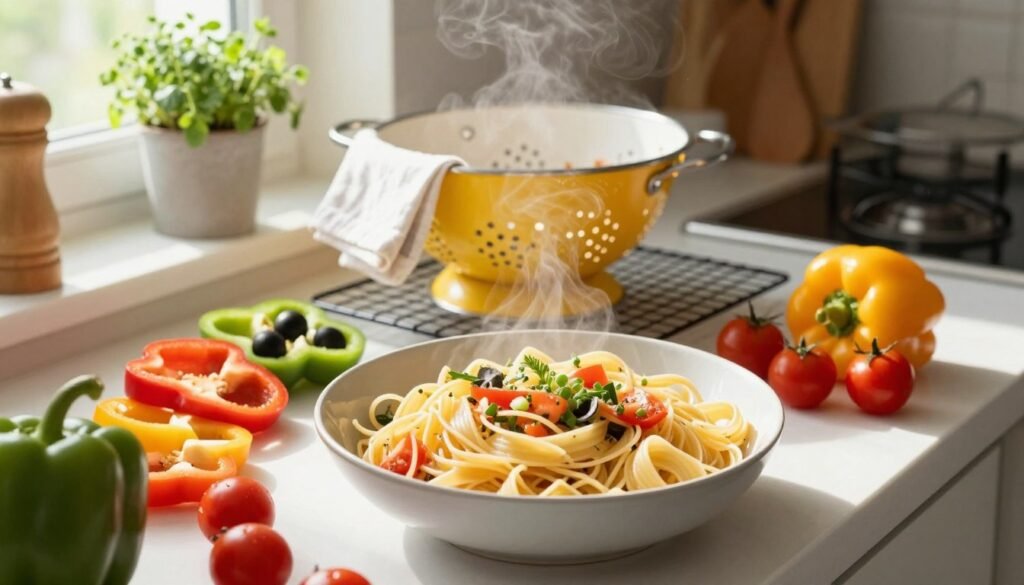
After draining your hot pasta, cool it down fast. Rinse it under cold running water for about 60 seconds. This stops it from cooking more and removes excess starch that makes it sticky.
Let your pasta air-dry for a few minutes before mixing. It should be cool but not wet. Too much water can make your dressing taste bland.
Combining Ingredients Properly
Now your pasta is cool and dry, it’s time to mix. Here’s the best order:
- Add your prepared vegetables first
- Pour in the pasta salad dressing gradually
- Fold everything together gently with a large spoon
- Taste and adjust seasonings as needed
Gentle folding keeps the pasta and veggies intact. Work slowly to coat each piece with dressing. This careful method makes your salad look great and taste amazing when you serve it.
Tips for Storing Your Cold Pasta Salad
Keeping your cold pasta salad fresh is all about smart storage. The way you store it greatly affects its taste and safety. Your fridge is key to enjoying pasta salad for days.
Choosing the right container is essential. Use an airtight container to keep your salad fresh. Glass containers are best because they don’t absorb smells or stains. Sealed properly, your salad stays fresh for up to three days.
As your salad sits, it may dry out. The pasta absorbs the dressing, making it less moist. To fix this, add a bit of olive oil or lemon juice before serving.
Storage Best Practices
Follow these simple rules to keep your salad fresh and safe:
- Store at 40°F or below in your refrigerator
- Keep pasta salad in airtight containers away from raw meat
- Check your salad before serving for any signs of spoilage
- Add extra dressing or oil if the salad appears dry
- Never leave pasta salad at room temperature for more than two hours
| Storage Method | Duration | Best For |
|---|---|---|
| Airtight Container (Refrigerator) | 3 Days | Daily meals and next-day lunches |
| Covered Bowl (Refrigerator) | 2 Days | Short-term storage |
| Freezer (Not Recommended) | Not Suitable | Pasta becomes mushy when thawed |
“Proper storage is the secret to enjoying your homemade pasta salad throughout the week without waste.”
Dressing-heavy pasta salads dry out faster. Store dressing separately for more than a day. This keeps the pasta from getting too soggy and lets you adjust moisture when serving.
Creative Variations for an Italian Pasta Salad
Take your italian pasta salad to the next level by trying new proteins and herbs. These add authentic Mediterranean flavors. Adding thoughtful ingredients turns a simple side dish into a main course. Pasta salad is all about flexibility, letting you customize each batch to your liking.
Adding Protein Sources
Protein makes your italian pasta salad a full meal. Here are some great choices:
- Grilled chicken breast cut into bite-sized pieces
- Chickpeas for a vegetarian powerhouse
- Bocconcini mozzarella balls for creamy texture
- White beans for earthiness and fiber
- Grilled shrimp for seafood lovers
- Hard-boiled eggs for richness and protein
Each protein adds its own flavor and nutrition. Grilled chicken stays tender when cooled right. Chickpeas add heartiness without overpowering the salad. Bocconcini mozzarella balls keep the salad creamy.
Incorporating Fresh Herbs
Fresh herbs should go in last. This keeps their color and oils fresh:
- Basil brings sweet, peppery notes
- Parsley adds freshness and brightness
- Oregano delivers authentic Mediterranean taste
Chop herbs just before adding them to your salad. This keeps them from darkening or wilting. The oils in fresh herbs stay strong when they don’t mix with acidic dressings for too long.
Serving Suggestions for a Summer Pasta Salad
Your summer pasta salad should look great when you serve it. How you present it can make a big difference. A large, shallow bowl is best because it highlights the salad’s colors and ingredients.

Think about how you’ll set up your serving area. Here are some tips to keep your salad looking and tasting its best:
- Choose a wide, shallow bowl to display all the colors and textures
- Place the bowl on a bed of ice during warm weather events
- Nest your serving bowl inside a larger container filled with ice for extra cooling
- Keep your summer pasta salad in a shaded area away from direct sunlight
- Provide serving utensils that let guests scoop without pushing ingredients around
Temperature control is critical when serving outdoors. Your cold pasta salad can spoil quickly in hot weather. Placing it over ice keeps it at a safe temperature for hours.
A well-presented dish on the table speaks volumes about the care you put into preparing it.
Think about the size of your event and where you’re serving. For small gatherings, one bowl is enough. For bigger events, use multiple smaller bowls. This keeps the salad fresh and makes it easier for guests to get some.
Common Mistakes to Avoid When Mixing
Making a perfect italian pasta salad needs careful mixing. Many home cooks rush this step and get disappointing results. Knowing what to avoid helps you make a fresh and flavorful salad.
One big mistake is mixing ingredients too hard or too soon. This breaks down veggies and makes them soggy. A soggy salad is not appealing.
Preventing Soggy Ingredients
Timing is key when making your creamy pasta salad. Add wet ingredients like tomatoes and cucumbers just before serving. This prevents them from getting soggy.
Here’s how to keep your salad crisp:
- Mix pasta and dressing first, then chill separately
- Cut vegetables into uniform sizes for even texture retention
- Pat dry all washed vegetables with paper towels
- Store dressing in a separate container until ready to serve
- Fold in delicate ingredients gently at the last moment
Ensuring Proper Seasoning Balance
Under-seasoning or over-seasoning can ruin your salad’s flavor. Taste your salad many times during preparation. Start with a little salt and pepper, then adjust as needed.
| Seasoning Element | When to Add | Testing Method |
|---|---|---|
| Salt | After combining pasta and dressing | Taste a small fork sample |
| Pepper | Before final mixing | Check for balanced bite |
| Fresh herbs | Right before serving | Smell for aromatic intensity |
| Vinegar or lemon juice | During dressing preparation | Test for tangy brightness |
Always have a small spoon for constant tasting while you prepare. This way, you avoid surprises when serving your salad. Paying attention to detail makes your dish special.
Making Your Quick Pasta Salad Ahead of Time
Planning ahead makes hosting easier. You can make a quick pasta salad a day before your event. This saves you time when guests arrive. It’s perfect for busy hosts who want to enjoy their party.
Begin by boiling your pasta and chopping veggies up to 24 hours early. Store each part in separate containers in the fridge. This keeps your salad fresh and prevents it from getting soggy.
For the dressing, save about one-third for later. Mix the rest with pasta and veggies before combining. This keeps your salad moist and flavorful.
Let your salad rest in the fridge overnight. The flavors will blend, making it taste even better. Your salad will be more complex and delicious after a few hours.
Preparation Timeline
- Cook pasta and chill it completely
- Chop all vegetables and store separately
- Mix dressing in advance
- Combine salad 30 minutes before serving
- Add reserved dressing at the last moment
This method keeps your salad delicious from morning to dinner. You enjoy fresh taste with the ease of making it ahead.
Conclusion
Learning to make homemade pasta salad is a great skill. It lets you create delicious dishes for any time of the year. You now have the tools to make meals that are tasty, look good, and feel right.
Your friends and family will love the fresh, colorful dishes you make. This is thanks to your hard work in the kitchen.
With these quick pasta salad tips, you can make meals that wow everyone. This guide shows you how to pick the best ingredients and prepare them well. You’ll also learn how to mix everything for the perfect taste and texture.
This knowledge lets you control your cooking. You know how to avoid mistakes and keep your salad fresh for later. You can also try new things to match your taste and diet.
Start your pasta salad journey today. Use these tips to get better in the kitchen. Enjoy making tasty meals that bring people together at your table.