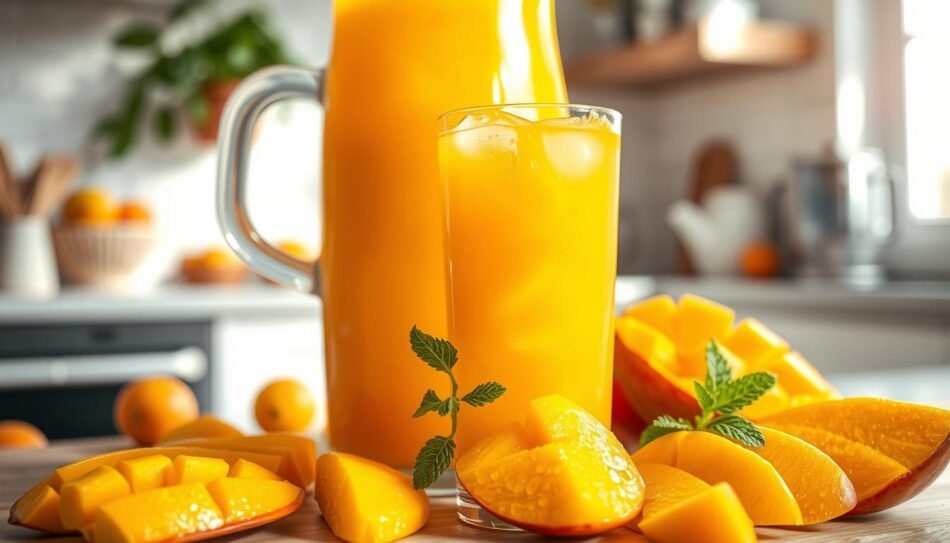

Learn how to make a refreshing drink at home. This 3-Ingredient Mango Juice Is So Good My Family Calls It Liquid Sunshine and you will love this easy recipe.
Remember those perfect summer days? The sun feels warm, the air is sweet, and you crave something truly refreshing. Imagine capturing that bright, tropical feeling in a glass.
With just three simple components, you can create a vibrant drink that feels like sunshine. This beloved recipe transforms ripe mango into a smooth, delicious beverage in about ten minutes.
As Danielle Fahrenkrug notes, your standard kitchen blender does all the work. You get a fresh fruit drink with no hidden additives. Each serving is a relatively light choice at around 125 calories.
This 3-Ingredient Mango Juice Is So Good My Family Calls It Liquid Sunshine
It’s more than just a mango juice. It’s a way to bring a burst of natural energy and joy to your table. Your family and guests will love its cheerful, sunny character.
Key Takeaways
- Enjoy a vibrant, tropical flavor profile from fresh mango.
- Control every ingredient for a pure, additive-free fruit drink.
- Create a nutrient-dense beverage perfect for warm days.
- Prepare the entire drink in just 10 minutes using a blender.
- Each glass is packed with natural sweetness and essential vitamins.
- This refreshing option brings a bright, sunny feel to any meal.
Introduction to the Recipe
Understanding the subtle difference between juice and nectar is key to achieving an authentic tropical flavor. While the terms are often used interchangeably, mango nectar typically implies water and a sweetener have been added to the blended fruit.
Danielle Fahrenkrug highlights that fresh mango juice is a raw, refreshing beverage. You can enjoy it straight or mix it into cocktails. This recipe is designed for simplicity, letting you create a professional-quality drink in your kitchen.
Selecting the best mangoes at their peak guarantees your homemade version will be incredibly sweet. Many people love the thick, pulpy texture. It feels like a special treat compared to thin store-bought options.
You control the consistency. Easily adjust the ratio of fruit to water for a thinner or thicker glass. By following these steps, you turn raw produce into a truly satisfying tropical experience.
Choosing the Perfect Mango for Your Juice
Your journey to a perfect glass begins with picking the ideal fruit. The right mango determines your drink’s sweetness, texture, and overall flavor. A ripe, fragrant choice yields the best mango juice.
Identifying Fresh, Ripe Mangoes
To make mango juice that shines, find fruit yielding slightly to a gentle squeeze. The skin should have a vibrant color and a sweet aroma near the stem.
When you cut mango for your beverage, slice carefully around the large, flat seed. Scoop the flesh away from the skin to maximize your fresh mango yield. Always trim away any stringy bits near the seeds for a smooth result.
You don’t need a special juicer. A standard blender purees the mango pulp perfectly with a little water.
Exploring Varieties: Kent, Keitt, Tommy Adkins, and More
Different mangoes offer unique profiles. Popular grocery store types like Kent, Keitt, and Tommy Adkins are juicing champions.
They provide a consistent, rich texture ideal for homemade food and drinks. A large fruit typically gives about one cup of pulp, perfect for a single serving.
| Variety | Best For | Flavor Profile | Pulp per Large Fruit |
|---|---|---|---|
| Kent | Juicing & Smoothies | Sweet, Rich, Tropical | ~1 cup |
| Keitt | Juicing & Eating Fresh | Mild, Very Sweet, Low Fiber | ~1 cup |
| Tommy Atkins | All-Purpose Use | Tangy, Sweet, Vibrant Color | ~3/4 cup |
If you have extra fruit, dice it into cubes and freeze for future use. Selecting the right variety ensures your juice has a wonderful balance. Your ingredients will blend into a refreshing, sunny drink.
The Essential Ingredients: Mango, Coconut Water, and More
The magic of a truly refreshing drink lies in its simplicity and quality ingredients. You only need a few key items to create a vibrant, tropical beverage at home.
Review of Key Ingredients and Measurements
Your foundation is fresh mango, a liquid base, and an optional sweetener. Ripe mango provides the sweet, rich pulp that forms the heart of your drink.
Danielle Fahrenkrug suggests using two cups of water or chilled coconut water for four servings. Coconut water adds electrolytes and a subtle tropical note that complements the fruit perfectly.
If you desire extra sweetness, incorporate sugar, honey, or another sweetener. A splash of lemon juice—about two teaspoons—brightens the flavor and helps break down fibers for a smoother consistency.
For a balanced result, two large mangoes typically pair well with two cups of liquid. You can reduce the water for a more intense flavor. A standard blender effortlessly combines these components.
These simple ingredients work together to create a nutritious, easy-to-make refreshment. Your homemade version will be free of additives and full of sunny character.
Step-by-Step Guide to Preparing Your Mango Juice
The actual preparation of your homemade mango juice is quick and incredibly satisfying. Following a clear method ensures you get that perfect, silky-smooth consistency every time.
Cutting and Scooping the Mango
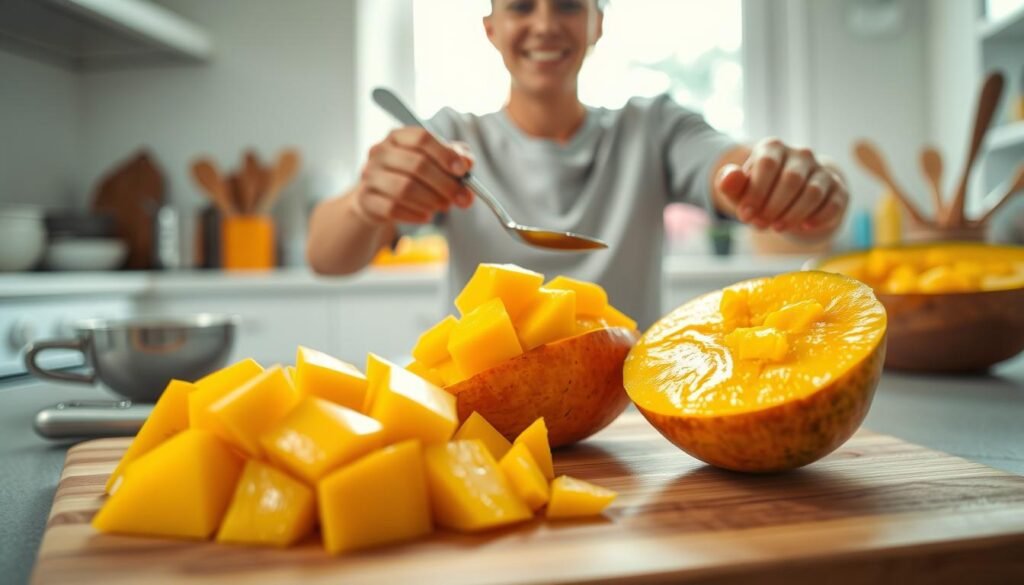
First, wash your ripe mango thoroughly. To cut mango safely, slice down each side of the large, flat seed. You’ll have two fleshy cheeks and a middle section.
Score the fruit flesh in a grid pattern without piercing the skin. Then, use a spoon to scoop the cubes of mango pulp directly into your blender. This technique captures maximum flavor and is highly effective.
Always remember to trim any stringy bits from around the seeds. This simple step keeps the final texture of your juice perfectly smooth.
Blending for the Ideal Consistency
Add your chosen liquid to the blender with the pulp. Water or coconut water works perfectly. For extra brightness, include a splash of lemon juice. A bit of sugar can be added if your mangoes aren’t super sweet.
Danielle Fahrenkrug suggests you blend smooth for about 15 seconds. This short burst is usually enough to achieve a drinkable puree. Your goal is a uniform, velvety mixture.
If the consistency seems too thick, simply add more water, a little at a time. Blend again briefly after each addition. You control whether your final juice is rich or light.
This entire process turns fresh ingredients into a high-quality base for your delicious beverage in mere moments.
Tips for Enhancing the Flavor of Your Juice
Your freshly blended mango base is a fantastic canvas for creative flavor enhancements. Small, thoughtful additions can elevate your drink from simple to spectacular.
Incorporating Citrus and Sweeteners
Balancing sweetness and acidity is the key to a truly balanced nectar. If your fruit isn’t perfectly ripe, a small amount of honey or simple syrup integrates seamlessly into the cold liquid.
A squeeze of fresh lemon juice is a professional chef’s trick. It brightens the overall flavor and helps cut through the natural fiber for a smoother consistency.
For a zesty tropical twist, consider a splash of orange juice. Experimenting with different sweeteners like sugar or agave lets you customize the recipe to your taste.
Stirring in a few fresh mint leaves after blending adds a wonderfully fragrant, cooling element. By adjusting these ingredients, you transform a basic fruit beverage into a gourmet creation.
Always taste your blend before serving. This allows you to make final adjustments to sweetness or acidity for the perfect result.
This 3-Ingredient Mango Juice Is So Good My Family Calls It Liquid Sunshine
Danielle Fahrenkrug’s family affectionately dubs their favorite homemade drink ‘liquid sunshine,’ a testament to its bright character. This article explores why a simple recipe can become a cherished tradition.
Uncovering the Secret Family Twist
The magic isn’t in a long list of ingredients. It’s in using fresh, high-quality components that highlight the natural essence of the fruit.
Many find the secret twist involves using chilled coconut water. This provides a refreshing, hydrating base that elevates the entire juice experience beyond ordinary nectar.
Your focus on selecting perfect, ripe mangoes ensures every glass delivers that delicious, bright flavor. The rich pulp forms the heart of the drink.
This homemade mango drink has become a staple in many households. It is both healthy and incredibly satisfying for all ages.
Sharing this vibrant beverage with loved ones is a wonderful way to enjoy the benefits of fresh food in a fun, liquid form. It truly captures the pure taste of summer.
Variations and Customizations for Your Mango Juice
Once you’ve mastered the basic blend, it’s time to experiment with creative twists and additions. Your homemade beverage is incredibly versatile. You can adjust the liquid base, mix in other fruit flavors, or add nutritious boosters.
Substituting Coconut Water and Other Liquids
The coconut water in your recipe can be swapped for other options. Each choice changes the drink’s character and flavor profile.
Sparkling water creates a fizzy, refreshing twist. Plain water lets the mango shine through purely. For a creamy texture, try unsweetened almond milk.
| Liquid Option | Best Use | Flavor Contribution | Ratio Tip |
|---|---|---|---|
| Coconut Water | Hydrating, Tropical | Subtle Sweetness, Nutty | Start with 1:1 pulp to liquid |
| Sparkling Water | Bubbly Refreshment | Neutral, Effervescent | Add after blending to keep bubbles |
| Plain Water | Classic, Light | Clean, No Added Taste | Adjust to desired thickness |
| Almond Milk | Creamy, Rich | Nutty, Slightly Sweet | Shake well before using |
Mixing with Other Juices for a Tropical Blend
Combine your mango puree with other fruit juices for a complex tropical blend. Pineapple juice adds a tangy punch. Orange juice brings a familiar citrus sweetness.
Passion fruit nectar introduces a wonderfully tart note. These mixes create exciting new recipes.
For extra nutrition, stir a tablespoon of chia seeds into your finished drink. They thicken the texture and add fiber. You can also add spices like ginger for depth.
Your blender makes making mango blends easy. Always taste as you go to perfect your signature version.
Health Benefits of Homemade Mango Juice
Making juice from fresh mangoes transforms a delicious fruit into a liquid source of health benefits. Your homemade mango beverage is more than a tasty treat. It delivers a truly impressive concentration of vitamins and minerals.
Rich Nutritional Profile and Vitamins
Each glass is loaded with essential vitamins. You get a powerful dose of vitamins A, C, and E. These nutrients are crucial for supporting your immune system and skin health.
Important minerals like potassium and magnesium are also present. They play a key role in maintaining healthy blood pressure. Selenium contributes to overall cellular function.
| Nutrient | Key Benefit | Notable Amount Per Serving |
|---|---|---|
| Vitamin C | Immune Support & Antioxidant | High |
| Vitamin A (Beta-carotene) | Vision Health & Cell Growth | Significant |
| Potassium | Regulates Blood Pressure | Good Source |
| Dietary Fiber | Promotes Digestive Health | From the Pulp |
The high fiber content found in the pulp is a major advantage. It helps stimulate digestion and maintains a healthy gut environment. This is something you often lose in store-bought versions.
By following a simple recipe, you avoid the concentrated sugars and additives in commercial products. Your drink becomes a much healthier choice. You can explore other healthy recipes using a blender instead of a juicer.
Choosing to make your own homemade mango juice prioritizes your wellness. You enjoy a delicious, nutrient-dense drink packed with natural goodness.
Storage, Serving, and Enjoyment Tips
Proper storage techniques are key to maintaining the fresh, sunny character of your creation. Keeping your beverage at its best allows you to savor that tropical flavor whenever you like.
Preservation Methods and Freezing Tips
For immediate enjoyment, store your finished drink in an airtight jar. Place it in the refrigerator for up to three days. Always give it a gentle stir before pouring, as the natural pulp may settle.
If you have extra fruit, consider freezing the blended puree. Pour it into ice cube trays for convenient portions. These frozen cubes last for about three months in your freezer.
Later, you can drop a few cubes directly into your blender. Add a splash of water or coconut water to make a fresh glass in minutes. This method locks in the vibrant flavor perfectly.
Creative Serving Suggestions
Presentation elevates your homemade nectar into a special treat. Pour your chilled drink over a glass full of ice. Garnish with a fresh lime wedge or a sprig of mint for a beautiful touch.
Your mango puree is also a versatile base for other recipes. Use it in smoothies, cocktails, or even as a topping for yogurt. A tablespoon of honey or simple syrup can enhance the flavor if stored for a day or two.
These simple tips ensure your delicious, homemade beverage is always ready. You can enjoy a taste of the tropics anytime you crave it.
Conclusion
Now you possess all the knowledge needed to blend a perfect glass of sunshine. You have learned to create a delicious, refreshing mango juice that suits any season.
This simple juice recipe proves a fancy juicer isn’t necessary. Your standard blender purees ripe mango with water in minutes. You control every ingredient for a healthy, additive-free drink.
Remember, the quality of your mangoes is crucial for that sunny flavor. Feel free to customize your puree with different liquids or sweeteners. Explore other healthy recipes using your blender.
This post aims to inspire you to choose homemade, nutrient-packed beverages over store-bought options. Share your favorite variations in the comments. Enjoy your homemade liquid sunshine today!