Discover this delicious salamon recipe that’s perfect for busy weeknights. Learn how to prepare tender, flaky fish with simple ingredients in under 30 minutes
Imagine coming home after a long day, craving a delicious yet nutritious meal. This salmon recipe is your answer. It’s perfect for those who value flavor and efficiency.
This salmon recipe is your secret to a fast, mouthwatering meal. It impresses your family and saves you time. With just 20 minutes of prep, you’ll make a dish that rivals restaurants. It’s ideal for busy people, parents, or anyone who loves tasty meals without fuss.
Key Takeaways
- Discover a salmon recipe that takes only 20 minutes to prepare
- Learn how to create a restaurant-quality meal at home
- Enjoy a nutritious and delicious dinner with minimal effort
- Perfect for busy weeknights and health-conscious individuals
- Simple ingredients and straightforward cooking technique
Why This Easy Salmon Recipe Is Perfect for Any Occasion
Finding the right healthy fish recipe can change your dinner game. An easy salmon dinner is not just tasty. It’s also packed with nutrients that fit into your busy life.
Salmon is a versatile protein that makes any meal special. It’s great for family dinners, hosting friends, or a quick weeknight meal. This recipe meets all your needs.
Health Benefits of Salmon
Salmon is full of good stuff for your health:
- Rich in omega-3 fatty acids for heart health
- High-quality protein source
- Contains vitamin D and B vitamins
- Supports brain function and reduces inflammation
Time-Saving Benefits
Life gets busy, and you need quick, healthy meals. This salmon recipe is fast and easy. Most people can make it in under 30 minutes, perfect for weeknights.
Cost-Effectiveness
Cooking salmon at home saves money. This recipe lets you enjoy high-quality meals without the restaurant prices.
Eating well doesn’t have to be complicated or expensive!
Essential Ingredients for Perfect Salmon
Creating a delicious salmon dish starts with the right ingredients. Whether you’re a seasoned cook or a beginner, knowing the key components is crucial. It will help you improve your cooking skills.
Fresh vs Frozen Salmon Options
When making a baked salmon fillet, you have to choose between fresh and frozen salmon. Fresh salmon tastes better and feels softer. But, high-quality frozen salmon can also be tasty. Opt for wild-caught Alaskan or Pacific salmon for the best nutrition.
- Fresh salmon: Best within 1-2 days of purchase
- Frozen salmon: Convenient and often more affordable
- Wild-caught options provide superior taste and nutrition
Seasoning and Salmon Marinade Essentials
A great salmon marinade can make a big difference. Your basic marinade should include:
- Olive oil
- Dijon mustard
- Honey or maple syrup
- Fresh garlic
- Salt and pepper
“The secret to a perfect salmon dish is a balanced marinade that enhances, not overpowers, the fish’s natural flavor.” – Professional Chef
Kitchen Tools You’ll Need
To prepare your baked salmon fillet, you’ll need some essential tools. Make sure your kitchen is stocked with these items for a smooth cooking process:
- Baking sheet
- Parchment paper
- Mixing bowl
- Whisk
- Sharp knife
- Measuring cups and spoons
Pro tip: Always pat your salmon dry before applying the marinade. This helps seasonings stick better and gives you a perfect golden crust.
How to Choose the Best Salmon for Cooking
Choosing the right salmon is crucial for a great grilled or pan seared salmon dish. Knowing the different types of salmon can help you make a meal that wows your guests.
Pacific salmon has five main types, each with its own special traits:
- Chinook (King): Highest fat content, rich flavor
- Sockeye: Deep red color, robust taste
- Coho: Milder flavor, medium fat content
- Pink: Lightest flavor, budget-friendly
- Chum: Less fatty, best for smoking
When buying salmon, keep these points in mind:
- Wild-caught vs. farm-raised options
- Freshness indicators
- Color and texture
| Salmon Type | Best Cooking Method | Flavor Profile |
|---|---|---|
| Chinook | Grilled salmon | Rich, buttery |
| Sockeye | Pan seared salmon | Intense, bold |
| Coho | Baked | Mild, delicate |
Choose salmon that’s firm, bright, and smells like the ocean. Stay away from fish that looks off or smells too fishy. Fresh or well-frozen salmon will give you the best results in your recipe.
Preparation Steps for Your Salmon Recipe
Preparing salmon needs careful steps for a tasty dish. Whether it’s lemon garlic salmon or a new marinade, getting it right is key.
Before cooking, you must master some important steps. These steps can make your salmon truly special.
Proper Thawing Methods
Thawing salmon right stops bacteria growth and keeps it tender. Here’s how to do it:
- Take frozen salmon out of the freezer 24 hours before cooking
- Put it in the fridge on a plate to catch drips
- Don’t thaw salmon at room temperature
- Use cold water for faster thawing if you need to
Seasoning Techniques
A good marinade can change your dish. For lemon garlic salmon, try these seasonings:
- Pat salmon dry with paper towels
- Season with salt and pepper well
- Make a quick marinade with:
- Fresh lemon juice
- Minced garlic
- Olive oil
- Herbs like dill or parsley
Pre-Cooking Tips
Boost your salmon’s flavor and texture with these tips:
| Technique | Benefits |
|---|---|
| Room Temperature | Let salmon rest 15-20 minutes before cooking for even heat |
| Skin Preparation | Keep skin on for extra flavor and moisture |
| Marinading Time | Marinate for 30 minutes to avoid texture loss |
Pro tip: Always use fresh ingredients for your marinade for the best taste.
Simple Salmon Recipe You’ll Love
Making an easy salmon dinner is simple. This baked salmon fillet recipe will make your weeknights better with little effort. You’ll be surprised at how easy it is to make a dish like a restaurant’s at home.
Now, let’s look at what you need for this tasty salmon recipe:
- 4 salmon fillets (6 oz each)
- 1/4 cup pure maple syrup
- 2 tablespoons tamari sauce
- 1 tablespoon Dijon mustard
- 2 cloves minced garlic
- Fresh cracked black pepper
- Chopped fresh parsley for garnish
Preparing your baked salmon fillet is easy. Mix the maple syrup, tamari, Dijon mustard, and garlic in a bowl. Then, coat your salmon fillets in the marinade.
Here are some tips for a perfect easy salmon dinner:
- Preheat your oven to 400°F
- Bake the salmon for 10-15 minutes
- Check for an internal temperature of 145°F
- Let the salmon rest for 3-5 minutes before serving
Pro tip: For extra flavor, sprinkle some fresh herbs or add a squeeze of lemon juice just before serving.
Cooking Methods and Temperature Guide
Cooking salmon is an art that needs precision and knowledge. Different methods can turn your grilled or pan seared salmon into a great meal. Knowing the right techniques will help you get restaurant-quality results at home.
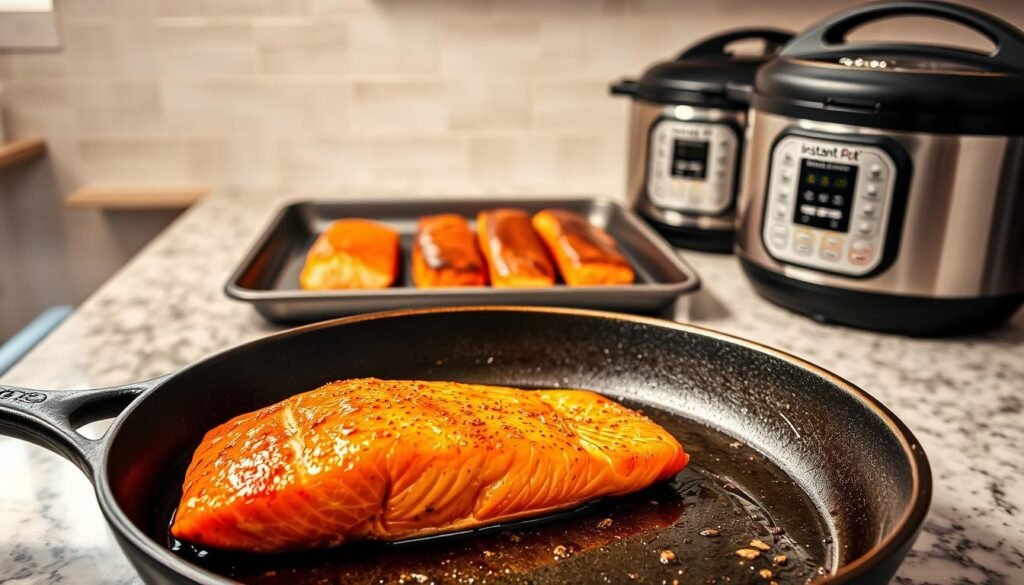
Salmon is versatile in cooking. You can cook it in many ways, each bringing out unique flavors and textures. The key is to keep the fish moist and reach the perfect internal temperature.
Oven Baking Techniques
Oven baking is a reliable way to cook salmon. Here’s how to get perfect results:
- Preheat oven to 400°F
- Line baking sheet with parchment paper
- Place salmon skin-side down
- Season with herbs and lemon
- Bake for 12-15 minutes
Internal Temperature Guidelines
Knowing the right internal temperature is key for safe and tasty salmon:
| Doneness Level | Internal Temperature | Texture |
|---|---|---|
| Rare | 115°F | Soft, translucent |
| Medium-Rare | 125°F | Slightly firm, pink center |
| Well Done | 145°F | Firm, opaque |
For pan seared salmon, use a meat thermometer to check doneness. Cooking times depend on the fillet’s thickness, so always check the temperature for the best results.
Pro tip: Let salmon rest for 3-5 minutes after cooking. This allows juices to redistribute, making the dish moist and flavorful.
Perfect Side Dishes to Complement Your Salmon
Choosing the right side dishes can make your honey glazed salmon meal special. Look for flavors that match your salmon without taking over. This way, you get a balanced taste.
Your salmon needs sides that are both tasty and healthy. Here are some great choices to make your plate complete:
- Herb Roasted Potatoes: Crispy outside, soft inside
- Air Fryer Green Beans: Crunchy and flavorful
- Roasted Broccolini: Elegant and full of nutrients
- Quinoa Salad: Light and packed with protein
- Citrus Coleslaw: Refreshing and tangy
Each side dish adds its own special touch to your meal. They match the sweet taste of honey glazed salmon. Plus, they’re quick to make, so you can enjoy a fancy meal in no time.
“The right side dish can elevate a simple salmon recipe from good to extraordinary.” – Culinary Experts
Think about how long it takes to cook each dish. Some can cook at the same time as your salmon. This makes cooking easier and less stressful.
Storage and Leftover Tips
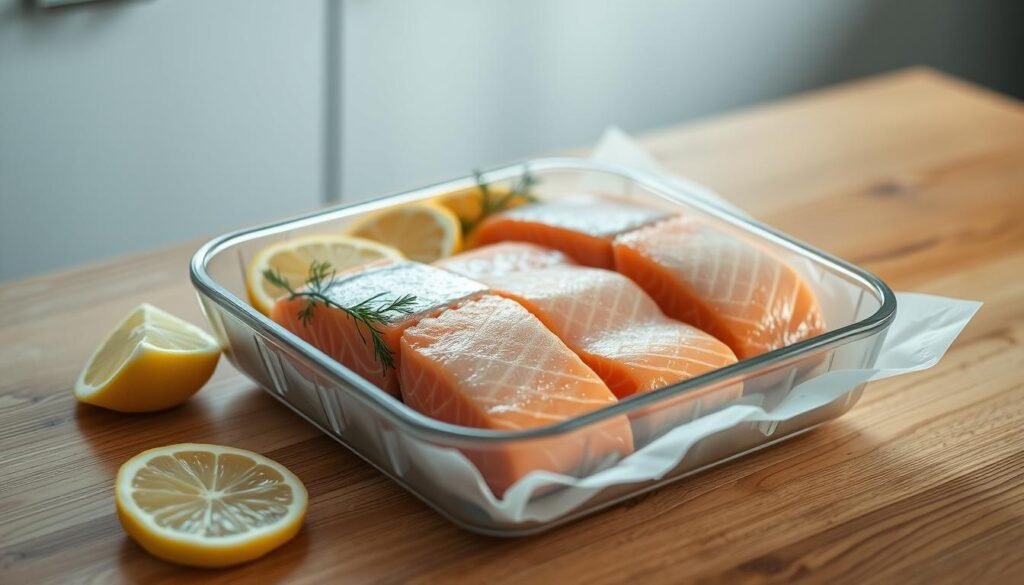
After making your tasty easy salmon dinner, it’s important to know how to store leftovers. This helps you enjoy your meal more and cuts down on waste. Storing leftovers right keeps the salmon’s flavor and nutrients intact.
Proper Storage Methods
Here are key tips for storing your salmon:
- Cool the salmon completely before refrigerating
- Use airtight containers to prevent moisture and odor transfer
- Store cooked salmon in the refrigerator within two hours of cooking
- Consume refrigerated salmon within 3 days for optimal taste and safety
Reheating Guidelines
Reheating salmon needs gentle methods to keep it soft. Pro tip: Try to avoid microwaving, as it can make the fish dry and tough.
- Preheat oven to 275°F
- Place salmon in a baking dish
- Add a splash of water or lemon juice
- Cover with foil to retain moisture
- Warm for 10-15 minutes until heated through
Instead of reheating, you can turn leftover salmon into a cool salad or sandwich. Keep the fish cold to keep its flavor fresh.
Conclusion
Diving into healthy fish recipes like salmon with herbs opens up a world of culinary excitement. You’ve learned how this versatile fish can transform your meal planning. It offers simple, nutritious options that delight both your taste buds and your health goals.
Preparing salmon doesn’t have to be intimidating. With the techniques you’ve discovered, you can confidently create restaurant-quality dishes in your own kitchen. Whether you’re a novice cook or an experienced chef, salmon offers endless possibilities for delicious, quick meals that support your wellness journey.
Your exploration of salmon recipes is just beginning. Each cooking method – from oven baking to pan searing – brings out unique flavors and textures. Experiment with different herbs, marinades, and side dishes to make each salmon meal a new adventure. Remember, eating healthy can be both exciting and delectable.
Start your salmon cooking adventure today. Embrace the simplicity, savor the nutrition, and enjoy creating memorable meals that nourish both body and soul. Your culinary skills are about to reach new heights with these salmon with herbs techniques.